
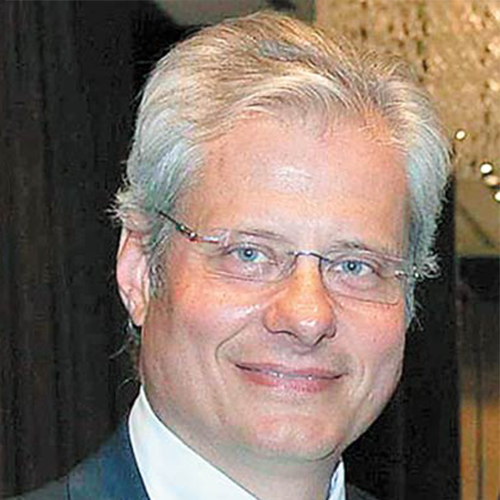
George Zalidis is a graduate of the Department of Agriculture at the Aristotle University of Thessaloniki, with a doctorate degree from the Department of Soil Science and a post-doctoral degree from the Department of Civil and Environmental Engineering at Michigan State University. He is Professor of the Laboratory of ''Remote Sensing, Spectroscopy and Geographic Information Systems '', a member of the Laboratory of “Applied Soil Science”, and a Professor of Pollution and Soil Degradation in the Department of Agriculture at Aristotle University of Thessaloniki. He is also the Director of the Interbalkan Environment Center (i-BEC) since 2007. In the respective administrative positions held to date, he has applied certified quality management standards with quantified administrative results. His research interests focus on issues such as the use of Earth Observation (EO) Data to produce corresponding EO services in the GEO Social Benefits Areas and Sustainable Development Goals, implemented with the standardized GEO compatible methodologies globally, regionally and locally. His EO research activity includes the use of spectral data in monitoring Agricultural and Natural ecosystems, using NEXUS approach for their management and restoration. In addition, his research interest covers the sector of circular economy, through the development of carbon footprint protocols in primary production, composting, micro and macro algal cultivation. His engagement with quality assurance protocols in Academia, Research, know-how transfer Organizations in all administrative positions served, nationally and internationally, including higher education Quality Assurance Accreditation, provided him with total quality managerial skills and experience to direct and manage related Institutions and Organizations. He has been expert and national representative, and member of international committees and councils, and also affiliated Professor in U.S. Universities. His vision is to bring together researchers, policy makers and public institutions with SMEs, exchanging know-how and experience, regionally and globally, thus strengthening economies and competitiveness, to provide solutions to administration and institutions and through quality management to ensure sustainability and after project support.